India is witnessing rapid urban growth, with cities expanding in population, infrastructure needs, and economic importance. Urban areas today play a major role in employment generation, housing demand, transportation systems, sanitation, and overall quality of life. Managing this transformation requires strong planning, effective policies, and coordinated implementation at the national level.
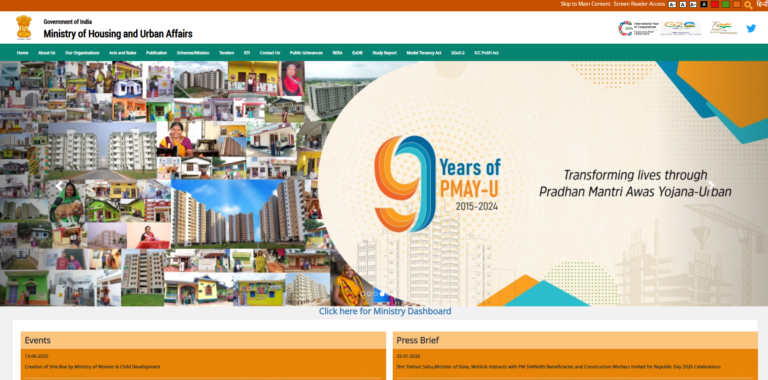
To address these growing urban challenges, the Government of India established the Ministry of Housing and Urban Affairs (MoHUA). This ministry is responsible for framing policies, launching national missions, and guiding states and urban local bodies in areas such as affordable housing, urban infrastructure development, sanitation, smart city planning, and sustainable urban governance.
For learners who want to understand how India manages city development and public housing systems, Digistudylab.in provides educational and informative content that explains the role of major government ministries in a simple and structured manner. Through such learning resources, visitors can gain clear knowledge about ministries like the Ministry of Housing and Urban Affairs and their contribution to India’s urban transformation.
The official website of the Ministry of Housing and Urban Affairs can be accessed at:
👉 https://mohua.gov.in/
1. What is the Ministry of Housing and Urban Affairs?
The Ministry of Housing and Urban Affairs (MoHUA) is a central government ministry in India responsible for formulating national policies, implementing programs, coordinating activities, and guiding execution related to housing and urban development across the country.
Key Highlights:
It is a Union Government ministry that deals with urbanization, housing policies, infrastructure development, and urban governance.
The ministry plays a crucial role in shaping policies for sustainable, inclusive, and resilient urban growth in India.
Its headquarters is located in Nirman Bhawan, New Delhi.
MoHUA works closely with central/state governments, urban local bodies, autonomous bodies, and private partners.
The ministry functions as a holistic entity overseeing housing policy formulation, urban livelihood, sanitation, and infrastructure development.
In short, MoHUA helps bridge gaps between urban planning, implementation, regulation, and better living standards for people in cities and towns.
2. History and Evolution of MoHUA
The Ministry’s journey reflects India’s changing urban priorities over decades:
1952 – Origins trace back to the early urban development setups under Government administration.
2004 – The Ministry of Urban Development and the Ministry of Urban Employment & Poverty Alleviation operated separately.
2006 – Merged to form the Ministry of Housing & Urban Poverty Alleviation.
2017 – The current Ministry of Housing and Urban Affairs was created by merging the Ministry of Urban Development and the Ministry of Housing & Urban Poverty Alleviation.
Over time, MoHUA’s role has expanded to include world-class initiatives in urban planning, housing, sanitation, digital governance, and city transformation.
3. Vision & Mission of the Ministry
The Ministry’s primary vision centers on creating inclusive, sustainable, integrated, and digitally empowered urban India. It aims to develop vibrant urban ecosystems where citizens have access to basic services and quality living environments.
The core missions include:
Providing adequate housing for all urban citizens
Supporting civic infrastructure and urban services
Reducing urban poverty and improving livelihood opportunities
Promoting sanitation, public health, and clean cities
Leveraging technology and data-driven planning in urban governance
The ministry also plays a leading role in national urban reforms and capacity building for stakeholders across India.
4. Organizational Structure of MoHUA
MoHUA’s governance structure includes:
Cabinet Minister: Leads the Ministry at the national level and represents it in Parliament.
Minister of State (MoS): Assists the Cabinet Minister.
Secretary (Housing & Urban Affairs): Administrative head managing policy execution and daily operations.
Multiple departments and divisions focusing on aspects like urban planning, finance, housing, sanitation, and monitoring.
MoHUA also has attached offices, autonomous bodies, task forces, and partnering agencies to support implementation and policy feedback.
5. Major Responsibilities and Functions
Here are some of the Ministry’s prime functions:
Housing Policy & Regulation
MoHUA formulates national policies for housing development, affordable dwellings, and regulation frameworks to support shelter access for all income groups.
Urban Infrastructure Planning
From roads and public transport to civic utilities, MoHUA plans and supports infrastructure growth to improve quality of life.
Urban Reforms & Digital Governance
The Ministry leads missions like the National Urban Digital Mission (NUDM) to digitize city governance and create integrated digital systems for transparency and citizen services.
Inter-Governmental Coordination
MoHUA works with other ministries, state governments, and local urban bodies to align urban development goals.
Data, Monitoring & Evaluation
With platforms like Urban Statistics for Human Resources and Assessments (USHA), the Ministry collects and uses data for evidence-based decisions.
Policy Advocacy
MoHUA regularly guides policy changes and regulatory frameworks to modernize urban planning and governance.
6. Flagship Schemes and Programs
The Ministry of Housing and Urban Affairs oversees several transformative flagship programs that affect millions of urban citizens. These schemes directly serve goals like affordable housing, infrastructure improvement, job creation, sanitation, and smart digital ecosystems.
Let’s explore them in detail:
A. Pradhan Mantri Awas Yojana (Urban) – PMAY-U
Pradhan Mantri Awas Yojana – Urban is one of India’s most ambitious housing schemes, initiated to address the housing shortage and provide affordable homes in urban India.
Key Features:
Aims to provide “Housing for All” urban citizens, especially economically weaker sections, low-income groups, and middle-income families.
Offers financial assistance and subsidies to eligible beneficiaries for home construction, improvement, or purchase.
Components include beneficiary-led construction, affordable rental housing complexes, and credit-linked subsidies.
Who Can Benefit?
Eligible families often include those who do not own a pucca house in India, and belong to specific income categories as defined by the Ministry.
PMAY-U continues to ensure that every eligible urban household can dream of a secure, quality home.
B. Atal Mission for Rejuvenation and Urban Transformation (AMRUT)
AMRUT is a mission focused on basic urban infrastructure development such as:
Water supply systems
Sewage networks
Stormwater drains
Urban greenery & parks
The thrust is on improving quality of life in selected cities and towns through better planning and public amenities.
Under AMRUT, states prepare action plans and implement infrastructure projects to enhance public services and urban infrastructure resilience.
C. Smart Cities Mission
Although its original timeline had a planned completion, the Smart Cities Mission sought to transform cities into technology-enabled, citizen-centric urban spaces with:
Smart mobility solutions
E-governance systems
Sustainable energy solutions
Citizen-friendly urban design
The mission was a major step toward modernized cities that are more liveable and future-ready.
D. Swachh Bharat Mission – Urban
Swachh Bharat Mission – Urban (SBM-U) is India’s flagship sanitation initiative focusing on:
Eliminating open defecation in urban areas
Improving solid waste management
Upgrading public sanitation infrastructure
MoHUA drives and monitors implementation of SBM-U along with local urban bodies.
E. National Urban Digital Mission (NUDM)
NUDM aims to digitally transform urban governance in India by creating a shared infrastructure framework that:
Enables citizens to access urban services digitally
Supports data integration among urban bodies
Improves transparency and governance workflows
It is a major step toward digitally empowered urban India.
7. Other Services & Online Platforms by MoHUA
MoHUA’s official portal also provides access to several online services and digital platforms for citizens, professionals, and government employees.
Here are some prominent examples:
eSampada Portal
An online platform for government accommodation allotments and office spaces management under the Directorate of Estates.
This system automates and simplifies the allotment process for government employees and agencies.
Mission Dashboard
MoHUA’s mission dashboard allows visitors to view real-time data and progress on major programs such as:
Smart Cities projects
PMAY-U houses sanctioned and completed
AMRUT implementation progress
This portal offers transparency and accountability to citizens.
8. How MoHUA Impacts Everyday Life
The work of MoHUA has direct and indirect impacts on millions of Indians:
Affordable Housing Opportunities
Millions of urban residents receive financial support and housing assistance under PMAY-U.
Better Urban Infrastructure
Quality water supply, drainage systems, and public amenities enhance the overall urban experience.
Enhanced Livelihoods
Programs under the ministry support economic engagement for urban poor and migrants.
Digital Access & Governance
Digital platforms promote easy access to services, monitoring, complaints, and data.
Sanitation and Health Improvements
Swachh missions contribute toward cleaner cities and improved public health services.
9. Why Citizens Should Know About MoHUA
Understanding the Ministry of Housing and Urban Affairs empowers citizens to:
Access government schemes and benefits
Track development projects in their cities
Provide feedback or grievance redressal
Learn about national priorities in urban planning
Contribute to community-level transformations
10. Visit the Official Portal
For complete details, latest updates, guidelines, schemes, official press releases, policy documents, and online services—visit the official Ministry of Housing and Urban Affairs portal below:
This portal is the authoritative source for all information related to MoHUA and its services.
Conclusion
The Ministry of Housing and Urban Affairs plays a crucial role in shaping the future of India’s cities and towns. Through national missions such as affordable housing programs, urban infrastructure development, sanitation initiatives, and digital governance reforms, the ministry works continuously to improve living conditions and strengthen urban systems across the country.
As India continues to move toward rapid urbanization, the importance of well-planned cities, sustainable housing solutions, and efficient civic services becomes even more significant. The policies and programs implemented by the Ministry of Housing and Urban Affairs help ensure that urban growth remains inclusive, resilient, and focused on long-term development.
For those who wish to understand how Indian government ministries function and how national urban policies impact everyday life, Digistudylab.in serves as an educational platform that explains these topics in a clear and informative manner. Learning about ministries like MoHUA helps build awareness about governance, public administration, and the development framework of modern India.
To explore official updates, schemes, guidelines, and services related to urban development and housing, visitors are encouraged to refer to the ministry’s official portal:
👉 https://mohua.gov.in/