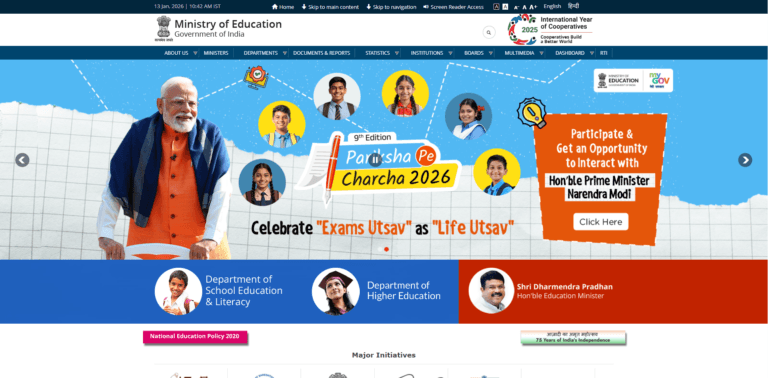
If you want to understand how education is planned, funded, and improved at the national level in India, the Ministry of Education (MoE), Government of India is the key institution to know. The Ministry shapes policies for school education, literacy, and higher education—while also supporting institutions, national boards, teacher development, digital learning platforms, scholarships, data systems, and quality frameworks.
For visitors of Digistudylab.in, learning about the Ministry of Education is useful in two ways:
It helps you understand how India’s education system is governed and improved through policy and programmes.
It helps you discover official portals and authentic government resources you can use for learning, academic planning, research, and updates.
Official Ministry of Education website (where you should always verify information)
The Ministry’s official website hosts policy documents, department pages, scheme information, dashboards, circulars/notifications, reports, and links to major education portals. The “Ministry of Education” page shows the structure and key sections like departments, documents, statistics, institutions, boards, multimedia, and dashboards.
Official link : https://www.education.gov.in/en
What is the Ministry of Education (MoE) in India?
The Ministry of Education, Government of India is responsible for national policy-making and planning for school education, literacy, and higher education. It works through two major departments:
Department of School Education & Literacy (DoSEL)
Department of Higher Education (DHE)
These departments coordinate with national bodies, state/UT governments, institutions, boards, and implementing agencies to expand access, improve quality, support inclusion, and modernize learning systems.
Leadership and administration (who runs the Ministry?)
The Ministry page “Who’s Who” lists the current Minister and Ministers of State along with office contact details. As per the official MoE listing:
Shri Dharmendra Pradhan — Hon’ble Minister of Education
Dr. Sukanta Majumdar — Hon’ble Minister of State for Education
Shri Jayant Chaudhary — Hon’ble Minister of State for Education
Knowing where to find official leadership details matters because names and roles can change over time, and the MoE website is the most reliable place to verify them.
Department 1: School Education & Literacy (DoSEL)
What the School Education & Literacy department does
The Department of School Education & Literacy focuses on ensuring universal access to quality school education, strengthening foundational learning, improving learning outcomes, promoting inclusive education, and supporting key national bodies and schemes.
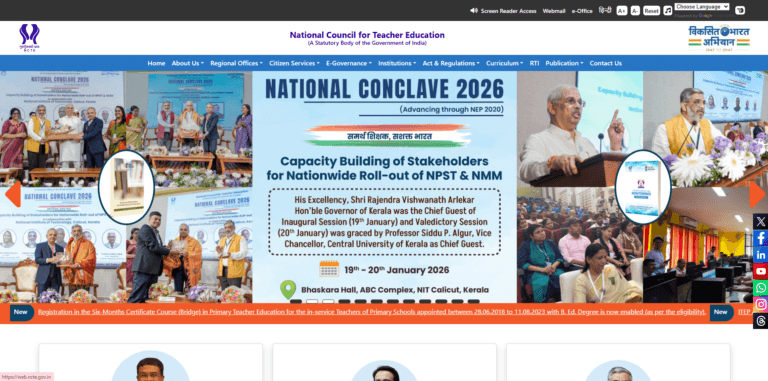
On its official page, DoSEL highlights its work through autonomous/statutory bodies and key schemes. It mentions bodies such as CBSE, KVS, JNV, NIOS, NCERT, and NCTE, and programmes like Samagra Shiksha and PM POSHAN (among others).
Major schemes and initiatives under School Education
1) Samagra Shiksha
Samagra Shiksha is an integrated scheme for school education covering the entire continuum from pre-school to Class XII. It supports infrastructure, access, equity, and quality improvements and aligns with education goals like SDG-4 and recommendations of NEP 2020.
Why it matters to you:
If you are a parent, teacher, or learner, Samagra Shiksha influences school infrastructure, learning resources, inclusive education support, teacher training, and interventions that affect government schools across India.
2) PM POSHAN (Mid-Day Meal Programme)
PM POSHAN (Pradhan Mantri Poshan Shakti Nirman) is the school nutrition programme (earlier known as the Mid-Day Meal programme). It supports nutrition and schooling together, especially in government and government-aided schools.
Why it matters to you:
Better nutrition supports better learning. PM POSHAN is one of India’s biggest school-linked welfare programmes and has direct impact on attendance and classroom engagement.
3) PM SHRI Schools
PM SHRI is a centrally sponsored initiative intended to develop more than 14,500 PM SHRI Schools as model schools that showcase quality practices and NEP-aligned development.
Why it matters to you:
PM SHRI schools aim to become demonstration schools with stronger infrastructure, improved teaching practices, and better learning environments.
4) NIPUN Bharat
The Ministry hosts the NIPUN Bharat platform under DoSEL, focusing on foundational learning (especially foundational literacy and numeracy).
Why it matters to you:
Foundational skills are the base of long-term academic success. When foundational learning improves, everything from maths to reading comprehension becomes easier.
5) PM e-Vidya (multi-mode digital learning)
PM e-Vidya is described as a multi-mode initiative that supports digital/online education through platforms including TV channels (like SWAYAM Prabha), online resources, and other modes.
Why it matters to you:
If you want free learning resources, structured content, and multi-mode access (including TV-based channels), PM e-Vidya is a major official route.
6) Vidyanjali (community and private sector participation)
Vidyanjali is an initiative to strengthen schools through community and private-sector participation and support.
Why it matters to you:
It creates opportunities for volunteers, alumni, organizations, and communities to contribute to school development—skills, resources, mentoring, and infrastructure support.
Department 2: Higher Education (DHE)
What the Higher Education department does
The Department of Higher Education supports and strengthens colleges, universities, technical education, research quality, rankings, data systems, and reforms. Its official page lists schemes and statistics resources under the department.
Major schemes, systems, and quality tools in Higher Education
1) RUSA (Rashtriya Uchchatar Shiksha Abhiyan)
RUSA is a centrally sponsored scheme launched in 2013 to provide strategic funding to eligible state higher educational institutions, based on norms and outcomes.
Why it matters to you:
RUSA supports reforms and infrastructure development in state institutions, improving quality and governance.
2) AISHE (All India Survey on Higher Education)
AISHE is an annual web-based survey conducted by the Ministry of Education (since 2010–11) to portray the status of higher education in India. It collects data on enrolment, teachers, programmes, finance, infrastructure, and more.
Why it matters to you:
AISHE data is widely used in education research, planning, and policy analysis. If you are doing projects, reports, or competitive exam prep, official higher education data can strengthen your answers.
3) NIRF (National Institutional Ranking Framework)
The NIRF is hosted as an MoE platform and is the official framework used to rank higher education institutions in India.
Why it matters to you:
If you are choosing colleges/universities, NIRF provides an official ranking reference and helps you compare institutions using a common framework.
4) PM-USP (Pradhan Mantri Uchchatar Shiksha Protsahan)
PM-USP relates to scholarship support for higher education, with official guidelines available as a document under the MoE ecosystem.
Why it matters to you:
Scholarships and financial support are critical for access to higher education, and official guidelines help you understand eligibility, allocation logic, and structure.
National Education Policy (NEP) 2020: the “big picture” policy you should know
One of the most important resources hosted on the MoE website is the National Education Policy (NEP) 2020. The MoE’s NEP section describes how NEP 2020 envisions a transformation through a system rooted in Indian ethos and built on guiding pillars such as Access, Equity, Quality, Affordability, and Accountability.
Why it matters to you:
Many programmes, reforms, and new initiatives in both school and higher education are aligned with NEP 2020. When you understand NEP, you can better understand why new systems and frameworks are being created.
What you can find on the Ministry of Education website (key sections)
The official MoE website is not only “about the Ministry.” It is also a practical hub for:
1) Circulars, Orders, and Notifications
The MoE site includes a section for Circulars/Orders/Notification, allowing selection by year/month for official updates.
How to use it on Digistudylab.in:
When writing educational content about government updates, always verify through official circulars/notifications first rather than relying on social media forwards or incomplete news summaries.
2) Tenders (archives and procurement notices)
The website also hosts tender-related sections such as tenders archives.
Why this is useful:
If you are studying public administration, governance, or how government procurement works, tender pages are real-world examples of transparent administrative processes.
3) Departments and their scheme pages
The MoE website clearly separates content for School Education & Literacy and Higher Education and links to schemes, portals, and official pages.
4) Statistics and reports
MoE hosts statistics sections and official documents, including reports related to higher education and education systems. For example, AISHE publications are hosted and referenced through official sources.
5) Dashboards and programme portals
Many major initiatives (PM SHRI, PM e-Vidya, PM POSHAN, NIPUN Bharat, Vidyanjali, etc.) have their own official portals under the education.gov.in ecosystem or related MoE platforms.
How to use the Ministry website effectively (step-by-step)
If you want to guide your learning or verify information for assignments, projects, or competitive exams, here is a simple approach:
Step 1: Start with the Ministry overview page
Use the Ministry page that lists departments, documents, statistics, and dashboards to quickly find what you need.
Step 2: Choose your area
For school-related schemes and literacy initiatives → go to School Education & Literacy
For universities, colleges, rankings, and higher education data → go to Higher Education
Step 3: Verify using official pages (not screenshots or reposts)
For example:
Samagra Shiksha overview is available directly on the department scheme page.
PM POSHAN has its scheme page and portal pages.
PM SHRI has an official dashboard portal.
Step 4: Use data portals for factual points
If you are writing factual lines like “AISHE started in 2010–11” or “NIRF introduced in 2016,” use official portals/pages and cite them in your notes.
Why learning from official government portals is important
Many people learn about schemes and policies through social media summaries, but those can be incomplete, outdated, or misleading. Official portals give you:
authentic definitions and eligibility rules,
correct names of schemes (and renamed schemes),
official documents and guidelines,
reliable data and reports,
and official updates through circulars/notifications.
That’s why Digistudylab.in benefits from linking readers to the official portal for the final verification step.
RTI and transparency: how citizens can request information
India’s RTI framework enables citizens to request information from public authorities. The central RTI online portal provides services like lodging RTI requests/appeals and checking status.
The MoE website also shows RTI-related listings/entries connected with its departments (as part of transparency mechanisms).
Practical tip:
When you are learning civics/governance, RTI portals are real examples of how public accountability works beyond textbooks.
Conclusion
The Ministry of Education (MoE) is one of the most important ministries in India because it shapes the future of learning—from foundational literacy in early grades to world-class higher education frameworks and national data systems.
The official MoE website is not just an information page. It is a powerful learning hub that helps you:
understand how education policies work,
explore major schemes like Samagra Shiksha, PM POSHAN, PM SHRI, NIPUN Bharat, PM e-Vidya, and Vidyanjali,
use higher education tools like AISHE, NIRF, and schemes like RUSA,
and verify updates through official notifications and documents.
If you are building knowledge step-by-step, visiting official portals and learning directly from government sources is one of the smartest habits you can develop—especially for exams, research, and accurate general knowledge.
FAQ (Quick Answers)
1) What are the two main departments under the Ministry of Education?
Department of School Education & Literacy and Department of Higher Education.
2) Where can you find official school education schemes?
On DoSEL pages and scheme portals like Samagra Shiksha, PM POSHAN, PM SHRI, NIPUN Bharat, and Vidyanjali.
3) Where can you find official higher education rankings and survey data?
NIRF (rankings) and AISHE (higher education survey).
4) Where can you verify official circulars/notifications from MoE?
The Circulars/Orders/Notification section on the MoE website.