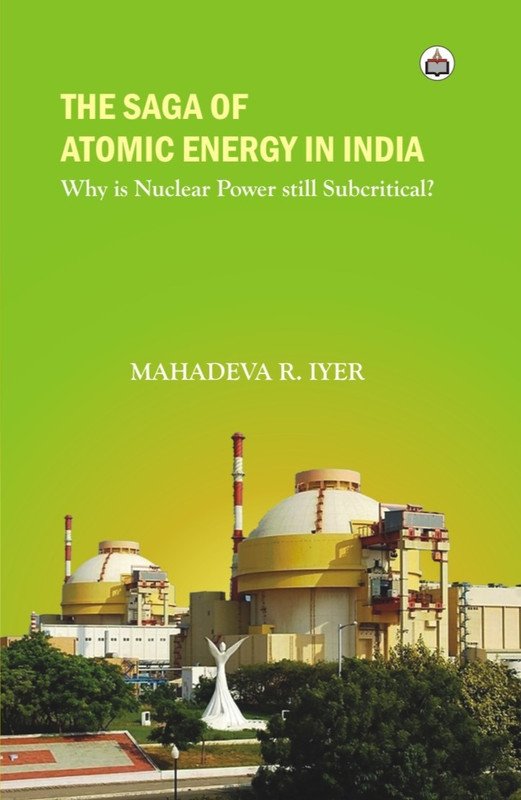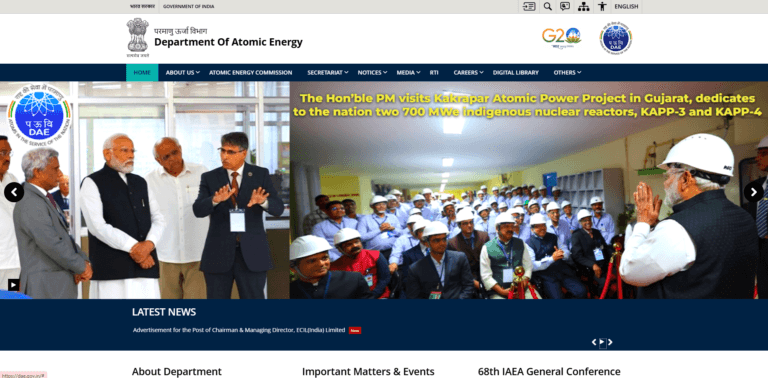
The Department of Atomic Energy (DAE) is a premier scientific organisation under the Government of India. It plays a crucial role in shaping India’s nuclear and atomic science landscape — from nuclear power and research to applications of radiation in healthcare, agriculture, industry, and environmental science. This department operates at the forefront of cutting-edge research and technological development that contributes to national growth and scientific advancement. You can explore more about DAE’s work and services at the official website https://dae.gov.in/.
Introduction: What Is the Department of Atomic Energy?
The Department of Atomic Energy (DAE) was established on 3 August 1954 under a Presidential Order and placed directly under the charge of the Prime Minister of India. This unique administrative arrangement underscores the strategic importance of atomic science to national interests. Its creation consolidated all activities of the Government of India related to atomic energy, nuclear science, and allied fields under one umbrella, governed by the Atomic Energy Act, 1948.
DAE is responsible for the comprehensive development and application of nuclear science and technology across a wide range of sectors — including power generation, scientific research, medical applications, agricultural development, industrial processes, and environmental solutions.
The Vision and Mission of DAE
The vision of the Department of Atomic Energy is to empower India through technology, contributing to economic growth, energy independence, scientific excellence, and a better quality of life for citizens. This includes offering accessible healthcare solutions, improving agricultural productivity, and driving innovations in science and engineering.
The mission is achieved through the development of nuclear power technologies, creation of knowledge base, research in advanced sciences, and application of radiation technologies in beneficial ways across society.
Historical Background
The journey of atomic energy in India began in the decades following independence. The field was nurtured by early visionaries like Dr. Homi Jehangir Bhabha, who is widely regarded as the architect of India’s nuclear program.
The Department itself was formalised in 1954 by Presidential Order, bringing all government functions concerning atomic energy into one unified department. Before this, the Atomic Energy Commission (AEC) was constituted in 1948 as an advisory and governance body focused on atomic research and exploration. Eventually, the AEC became an integral part of DAE’s structure.
Since then, DAE has been central to India’s nuclear power development, expansion of research facilities, exploration of atomic minerals, development of radiation technologies, and the establishment of various research and industrial units across the country.
Structure and Organisation
The Department of Atomic Energy is a multi-tiered organisation comprising several research centers, industrial organisations, public sector undertakings, service organisations, aided institutions, and other autonomous bodies. These units work in a coordinated manner to ensure the department meets its wide range of scientific and developmental goals.
In broad terms, the structure of DAE includes:
Research Centres
Industrial Units
Public Sector Undertakings
Service Organisations
Aided Institutions and Universities
Research Centres
The research sector forms the backbone of DAE activities. Key research units include:
Bhabha Atomic Research Centre (BARC) – India’s premier nuclear research facility located in Trombay, Mumbai. It leads in research and development in nuclear science, engineering, reactor technology, material sciences, radiology, electronics, and more.
Indira Gandhi Centre for Atomic Research (IGCAR) – Based in Kalpakkam, Tamil Nadu, this centre focuses heavily on the development of Fast Breeder Reactor (FBR) technology, which is critical for India’s long-term nuclear fuel strategy.
Raja Ramanna Centre for Advanced Technology (RRCAT) – Located in Indore, Madhya Pradesh, RRCAT is involved in advanced research areas such as laser technology, accelerator science, and material science.
Variable Energy Cyclotron Centre (VECC) – Based in Kolkata, VECC focuses on fundamental and applied research using cyclotron-based technologies for nuclear and material science.
Atomic Minerals Directorate for Exploration and Research (AMD) – Headquartered in Hyderabad, AMD is tasked with geological exploration and identification of mineral resources like uranium essential for nuclear power programmes. It has several regional centres across India.
Global Centre for Nuclear Energy Partnership (GCNEP) – A centre dedicated to international collaborations and partnerships in nuclear technologies and applications.
Industrial Organisations and Public Sector Units
Besides research centres, DAE oversees industrial organisations that contribute to the manufacturing, engineering, and production aspects of nuclear and allied technologies. Some areas these organisations contribute to include:
Nuclear fuel production
Heavy water production
Design and fabrication of reactor components
Specialised materials and engineering services
Moreover, the department has public sector undertakings working in strategic industries related to nuclear technology, fuel cycle services, and radiation applications.
Aided Institutions and Collaborative Education
The department also supports several educational, academic, and research institutions that operate autonomously while receiving guidance and funding from DAE. These include:
Homi Bhabha National Institute (HBNI) – A deemed university that integrates research and higher education across constituent institutions.
Tata Institute of Fundamental Research (TIFR) – A renowned institution for research in physics, mathematics, and interdisciplinary sciences challenging fundamental scientific questions and fostering doctoral-level studies.
Such institutions play an important role in training the next generation of scientists, engineers, and technologists who contribute to India’s scientific ecosystem.
Core Functions and Activities
Nuclear Power Generation
DAE is responsible for the design, construction, and operation of nuclear power plants across India. Through its units and partnerships with other government organisations, the department contributes to the country’s energy mix and long-term energy security.
Research and Development
The department oversees comprehensive research in areas such as:
Nuclear reactor design and safety
Radiation technologies
Accelerator and laser science
Materials science and engineering
Biomedical applications, including radiation medicine
Supercomputing and data analysis
This R&D portfolio ensures India remains at the forefront of scientific advancements and secure in its technological capabilities.
Non-Power Applications
One of the lesser-known but socially impactful roles of DAE is its work in non-power applications. This includes:
Radiation technologies for healthcare, such as cancer diagnosis and treatment protocols.
Radiation and isotope applications in agriculture for crop improvement and pest control.
Industrial applications like quality control in manufacturing.
Environmental science, including monitoring and mitigating radiation effects.
These applications exemplify how atomic science contributes to societal well-being far beyond electricity generation.
International Collaboration and Safety
DAE also engages with global partners to share scientific knowledge, participate in international research, and enhance safety protocols for nuclear and radiation technology. It works with regulatory bodies to ensure that nuclear and radiation facilities maintain the highest standards of safety and environmental protection.
Regulating Nuclear Safety
Although the Department of Atomic Energy implements and manages nuclear technologies, nuclear safety and regulatory oversight in India are handled by independent bodies such as the Atomic Energy Regulatory Board (AERB). AERB’s mission is to ensure that the use of ionising radiation and nuclear energy does not pose undue risk to public health or the environment.
Careers, Opportunities, and Public Services
DAE and its research centres often offer various career opportunities, including research fellowships, technician and scientist positions, internships, and training programmes. Information on careers, recruitment notifications, and official circulars can be found on the official DAE careers page.
Additionally, the portal provides access to citizen charters, public policies, annual reports, and publications that help students, researchers, and the public learn more about India’s atomic energy sector.
Why DAE Matters for India and the World
The Department of Atomic Energy is more than a government body — it is a pillar of India’s scientific and technological framework. Its contributions have shaped several crucial sectors:
Energy independence and sustainable power generation
Scientific research excellence
Medical advancements using nuclear techniques
Training and education for scientists and engineers
Agricultural and industrial innovations
Through sustained research and development, DAE ensures that scientific inquiry and innovation remain central to India’s progress.
How to Explore the Official Portal
For students, researchers, or enthusiasts wanting to dive deeper into the Department’s work, policies, projects, publications, and opportunities, visit the official website:
This portal hosts detailed information about the department, including:
History and mission
Activities and achievements
Units, research centres, and institutions
Career pages
Public documents, reports, and newsletters
Conclusion
The Department of Atomic Energy stands as one of India’s most important scientific institutions. It seamlessly integrates research, education, development, and practical applications of nuclear and radiation technology for national growth. From powering cities to advancing healthcare, its influence is broad and enduring.
Understanding DAE provides learners and readers with an appreciation for how atomic science intersects with public policy, research, education, and social development in the Indian context.