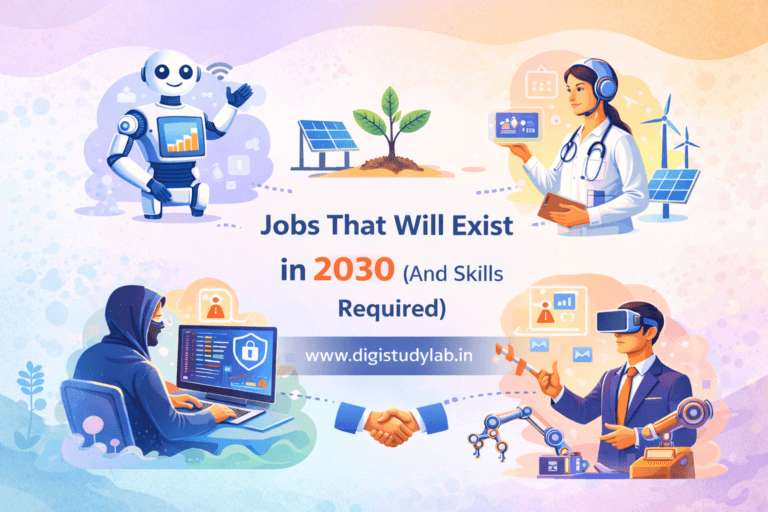
The global job market is evolving at an unprecedented pace. Technology, automation, digital transformation, environmental awareness, and globalization are reshaping industries across countries. As a result, the skills required to succeed in modern careers are changing rapidly. Academic degrees remain important, but employers increasingly focus on abilities that can be applied practically and effectively.
Understanding high-demand skills is essential for students who want to prepare for competitive exams, professional careers, entrepreneurship, or global opportunities. Awareness about these skills helps learners align their education with industry needs. Platforms like Digistudylab.in focus on spreading such awareness so that learners can make informed decisions about skill development and future planning.
This article explores the most important high-demand skills in India and across the world, explains why they matter, and describes how students can begin developing them.
Why Skill Demand Is Changing
The demand for skills changes because industries evolve. Technological advancement is one of the biggest factors influencing employment trends. Automation has replaced many repetitive tasks, but it has also created new opportunities that require analytical thinking, creativity, and digital competence.
Globalization has expanded employment opportunities beyond national boundaries. Professionals can work remotely for international organizations. Therefore, globally relevant skills have become more important.
Another major factor is sustainability. Environmental challenges are pushing industries toward green technologies and responsible business practices, creating demand for specialized skills.
Furthermore, the digital economy has transformed how businesses operate. Online platforms, data-driven decisions, and remote communication require individuals who are comfortable in digital environments.
High-Demand Technical Skills
Technical skills refer to abilities related to specific tools, technologies, or professional practices. These skills are highly valued because they directly contribute to productivity and innovation.
Data Analysis and Interpretation
Data is considered one of the most valuable resources in modern industries. Companies collect large amounts of information to understand trends, customer behavior, and operational efficiency. Professionals who can analyze data and interpret results are in high demand globally.
In India, sectors such as finance, healthcare, marketing, and governance increasingly rely on data-driven strategies. Skills in data analysis help organizations make informed decisions. Students who develop analytical thinking and basic understanding of data tools position themselves for diverse career opportunities.
Artificial Intelligence and Machine Learning Awareness
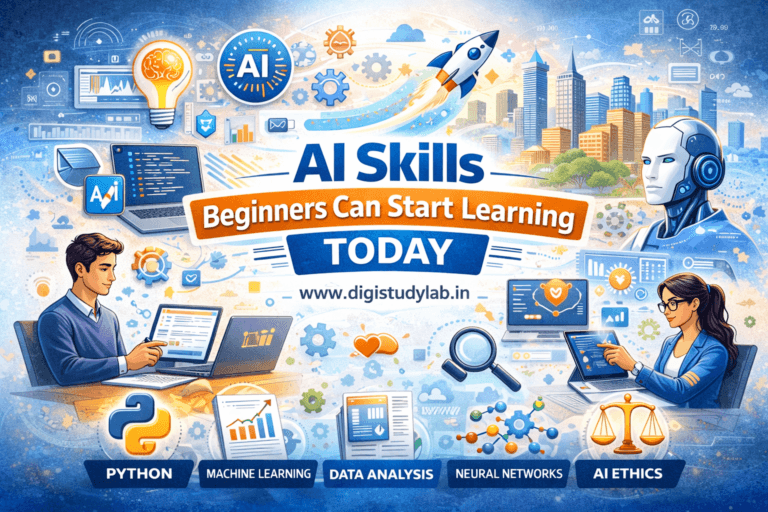
Artificial intelligence is no longer limited to research laboratories. It is integrated into everyday applications such as online services, automation systems, and smart devices. Professionals who understand AI concepts and their applications will continue to be in demand.
Even basic awareness of AI principles, algorithmic thinking, and ethical considerations provides a competitive advantage. Students who learn how intelligent systems work can adapt more easily to future technological environments.
Cybersecurity and Digital Protection
As digital systems expand, security risks also increase. Protecting information, networks, and user privacy has become essential. Cybersecurity professionals play a crucial role in preventing cyber threats and safeguarding digital infrastructure.
In India and globally, cybersecurity skills are highly valued in banking, government, healthcare, and corporate sectors. Understanding digital safety practices and risk management strengthens career readiness.
Cloud Computing and Digital Infrastructure
Modern businesses rely on cloud-based systems for storage, collaboration, and service delivery. Professionals who understand digital infrastructure and cloud environments support efficient organizational operations.
Students who develop familiarity with digital platforms and online collaboration tools gain practical exposure to industry-relevant systems.
High-Demand Non-Technical Skills
While technical skills are important, non-technical skills are equally critical. These abilities determine how effectively individuals work with others, solve problems, and adapt to change.
Communication Skills
Effective communication remains one of the most important skills worldwide. Whether in business, education, healthcare, or governance, professionals must express ideas clearly and collaborate efficiently.
Strong communication improves teamwork, leadership, and professional relationships. In global environments, the ability to communicate across cultures and digital platforms is especially valuable.
Critical Thinking and Problem-Solving
Industries increasingly value individuals who can analyze complex situations and propose solutions. Critical thinking allows professionals to evaluate information objectively and make informed decisions.
In India, competitive exams also assess analytical ability and reasoning skills. Developing problem-solving competence supports both academic and professional success.
Adaptability and Learning Agility
Change is constant in modern industries. Professionals must adapt to new technologies, methods, and environments. Learning agility — the ability to acquire new knowledge quickly — is highly valued.
Students who cultivate curiosity and openness to learning remain competitive in evolving job markets.
Emotional Intelligence
Emotional intelligence refers to understanding and managing emotions effectively. It includes empathy, self-awareness, and interpersonal sensitivity.
Organizations seek professionals who can collaborate respectfully and manage stress productively. Emotional intelligence improves leadership and teamwork abilities.
High-Demand Skills in India
India’s workforce is experiencing rapid transformation. The growth of digital services, startups, e-commerce, and technology-driven enterprises has increased demand for specialized skills.
Digital Literacy
Basic digital literacy is now essential for most professions in India. From government services to private businesses, digital systems are widely used. Students who are comfortable with online tools, communication platforms, and digital documentation are better prepared.
Financial Awareness
Understanding financial concepts such as budgeting, taxation, investment, and economic policies is valuable in both professional and personal contexts. Financial literacy supports entrepreneurship and career planning.
Government Exam-Related Skills
India has a strong culture of competitive exams for government jobs. Skills such as logical reasoning, quantitative aptitude, general awareness, and time management are highly demanded.
Students preparing for civil services, banking, or public sector roles benefit from structured skill development in these areas.
High-Demand Skills Globally
Global workforce trends emphasize interdisciplinary and digital competencies.
Cross-Cultural Communication
As organizations operate internationally, professionals must communicate effectively across cultures. Respecting diversity and understanding global perspectives enhance collaboration.
Innovation and Creativity
Innovation drives economic growth. Professionals who think creatively and develop new ideas contribute significantly to industries.
Sustainability Awareness
Global organizations increasingly prioritize sustainable practices. Understanding environmental impact and responsible resource management supports career growth.
Soft Skills That Complement Technical Expertise
Soft skills enhance the application of technical knowledge. They ensure that individuals can work effectively within teams and organizational structures.
Leadership Skills
Leadership is not limited to managerial roles. It involves initiative, responsibility, and guiding others. Developing leadership qualities improves career advancement opportunities.
Time Management
Efficient time management increases productivity and reduces stress. Professionals who prioritize tasks effectively contribute positively to organizational performance.
Collaboration and Teamwork
Modern workplaces rely on teamwork. Collaborative skills ensure smooth project execution and professional harmony.
Why Continuous Learning Is Essential
High-demand skills do not remain static. As industries evolve, new competencies emerge. Continuous learning ensures long-term relevance.
Students must adopt a mindset of lifelong learning. Updating knowledge through reading, training, and practical exposure strengthens adaptability.
How Students Can Start Developing High-Demand Skills
Skill development begins with awareness and practice. Students can explore online learning platforms, participate in projects, and engage in practical exercises.
Reading about industry trends and understanding global developments improves decision-making. Seeking mentorship and participating in workshops enhances exposure.
Developing both technical and soft skills creates balanced competence.
Role of Education Systems
Educational institutions must integrate skill-based learning into curricula. Project-based learning, internships, and interdisciplinary approaches prepare students for real-world challenges.
Teachers and mentors play a vital role in guiding learners toward relevant skills.
Role of Educational Platforms
Digital platforms contribute significantly to spreading awareness and structured learning. They help bridge the gap between theoretical knowledge and practical application.
Digistudylab.in supports learners by providing educational insights, awareness about high-demand skills, and guidance on career development. Such platforms empower students to prepare for evolving workforce expectations.
Conclusion
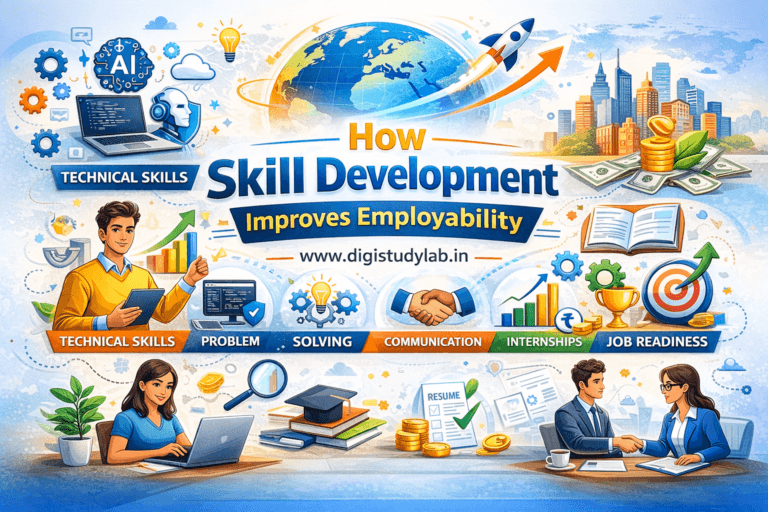
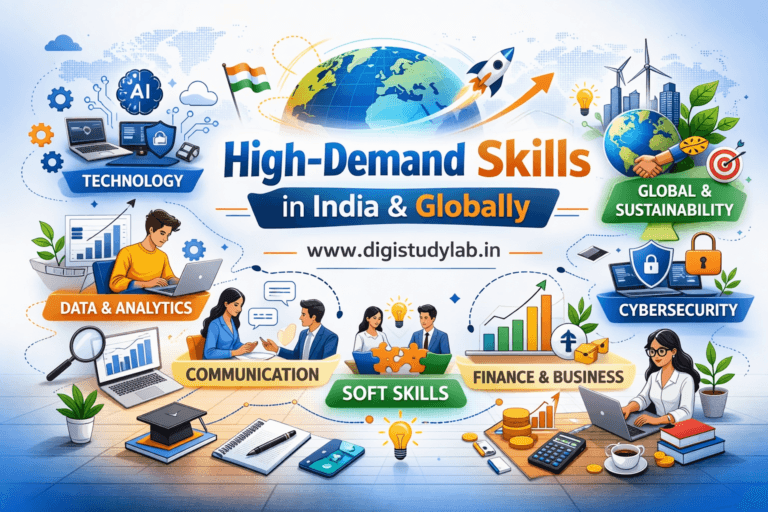
High-demand skills in India and globally reflect the changing nature of employment. Technical abilities such as data analysis, AI awareness, cybersecurity, and digital literacy are increasingly valuable. At the same time, non-technical skills like communication, critical thinking, adaptability, and emotional intelligence remain essential.
Success in the modern workforce depends on combining knowledge with practical competence. Students who develop these skills early position themselves for long-term growth and opportunities.
Awareness and continuous improvement are key. Platforms like Digistudylab.in help learners understand evolving trends and prepare effectively for future careers.
The future belongs to those who are skilled, adaptable, and committed to lifelong learning.