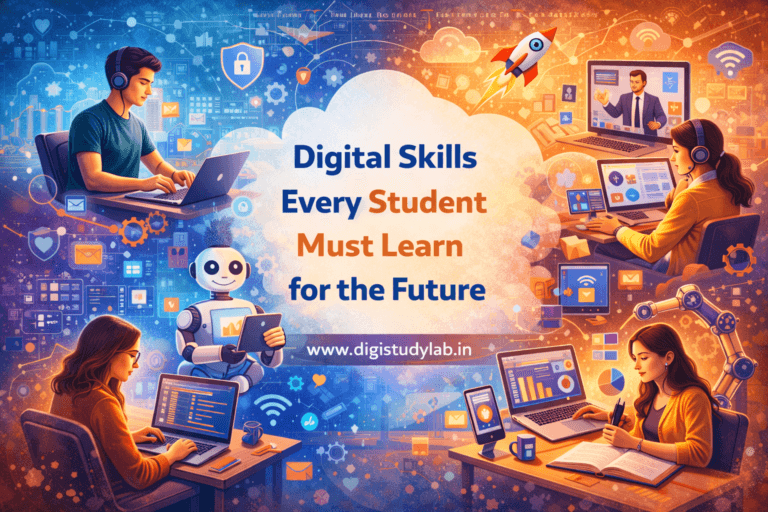
The world is moving rapidly toward a digital-first environment. Technology influences how people learn, communicate, work, and solve problems. From education and healthcare to business and governance, digital systems are becoming an essential part of everyday life. As a result, digital skills are no longer optional — they are fundamental for academic success, career development, and personal growth.
In the past, education focused mainly on theoretical knowledge and subject-specific expertise. Today, success depends on the ability to use technology effectively, adapt to digital environments, and continuously learn new tools. Educational platforms like Digistudylab.in emphasize the importance of awareness and learning in this evolving landscape so that students can prepare themselves for modern challenges and opportunities.
Digital skills help individuals become confident learners, efficient workers, and informed citizens. They allow students to access information, communicate globally, collaborate with others, and create innovative solutions. Understanding these skills early ensures that learners are prepared for the future workforce and capable of contributing meaningfully to society.
Understanding Digital Skills
Digital skills refer to the abilities required to use digital devices, software, and online platforms effectively. These skills include basic computer operations, internet usage, communication tools, data management, and advanced technological competencies.
Digital skills are not limited to technical professions. They are relevant for every field, including education, healthcare, business, engineering, media, and public administration. Whether it involves preparing assignments, attending online classes, analyzing data, or communicating professionally, digital competence has become essential.
In simple terms, digital skills enable individuals to interact with technology confidently and responsibly. They help learners move beyond basic usage and understand how digital systems function, how information is shared, and how problems can be solved using technological tools.
Why Digital Skills Are Essential for Students
The importance of digital skills has increased because the nature of learning and working has changed significantly. Education is no longer confined to classrooms and textbooks. Online platforms, digital resources, and virtual collaboration are now common learning methods.
Students use digital tools for research, assignments, presentations, and communication. Understanding how to navigate digital environments improves efficiency and learning outcomes. It also helps students stay informed about global developments and academic opportunities.
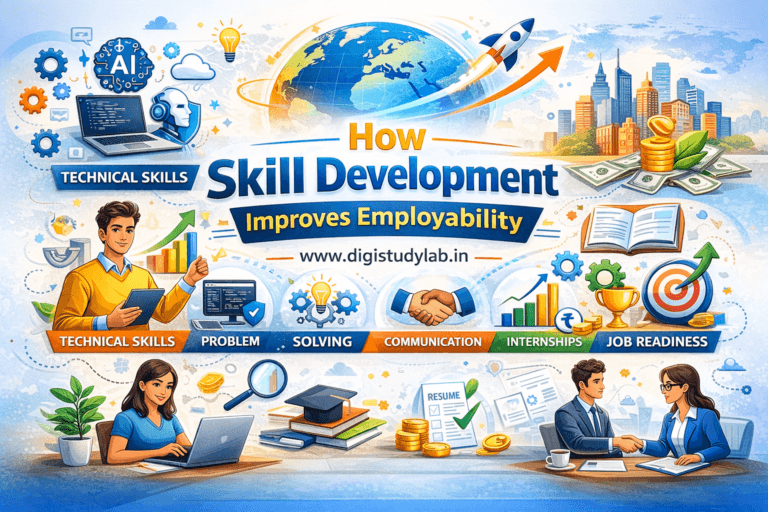
Career preparation is another major reason digital skills are essential. Employers expect candidates to be comfortable with technology, communication platforms, and data-driven tools. Digital competence enhances employability and professional confidence.
Digital skills also support creativity. Students can design content, create presentations, produce videos, and express ideas through multiple digital formats. This strengthens communication and innovation.
Another important aspect is digital safety. Understanding cybersecurity, privacy, and responsible online behavior protects individuals from risks and misuse.
Core Digital Skills Every Student Should Develop
Digital skills can be categorized into foundational, intermediate, and advanced levels. Each level contributes to overall development and future readiness.
Basic Computer Literacy
Basic computer literacy forms the foundation of digital competence. Students must understand how to operate computers, manage files, and use productivity tools such as word processors, spreadsheets, and presentation software.
This skill supports academic work, project preparation, and documentation. It also builds confidence in handling digital tasks independently.
Internet and Information Literacy
Accessing information is easy in the digital age, but identifying reliable sources requires critical thinking. Students must learn how to search effectively, verify information, and use credible academic resources.
Information literacy helps learners avoid misinformation and develop analytical skills.
Communication and Collaboration Tools
Modern learning and work environments depend on digital communication. Email platforms, video conferencing tools, and collaboration software allow individuals to connect globally.
Students who understand digital communication can participate in group projects, attend virtual classes, and present ideas effectively.
Data Awareness and Digital Organization
Managing digital information is essential. Students must learn how to organize files, manage digital records, and handle data responsibly.
This skill improves productivity and prepares learners for professional environments.
Advanced Digital Skills for Future Careers
As students progress, advanced digital skills become important for specialized roles and career opportunities.
Digital Content Creation
Creating digital content involves writing, designing, editing, and presenting information through digital platforms. Students can develop blogs, educational materials, and creative media content.
This skill enhances creativity and communication.
Coding and Computational Thinking
Understanding basic programming concepts improves problem-solving and logical thinking. Coding is not only for software professionals; it strengthens analytical abilities in multiple fields.
Data Analysis and Interpretation
Modern industries rely on data-driven decisions. Students who learn how to interpret data can contribute to research, business strategies, and policy development.
Cybersecurity Awareness
Protecting digital information is essential. Students must understand online safety, privacy protection, and responsible digital behavior.
Digital Skills and Future Careers
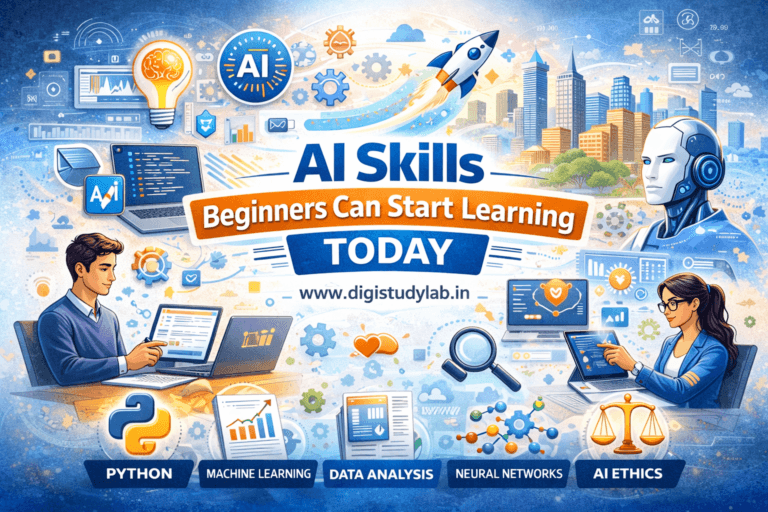
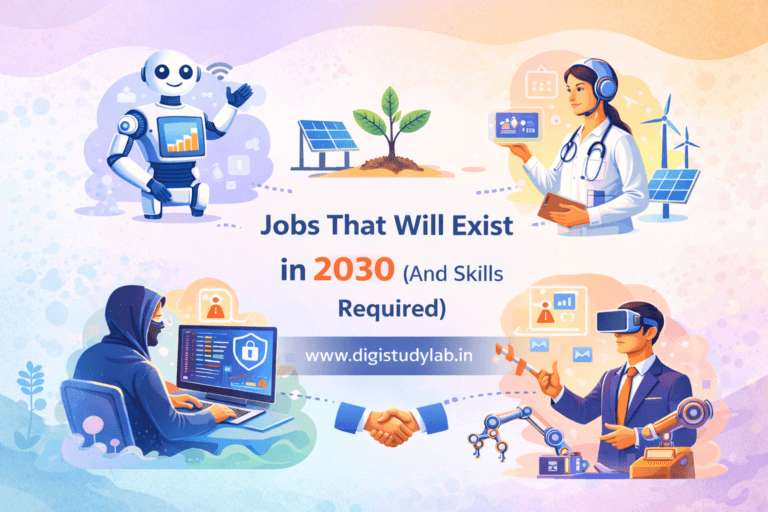
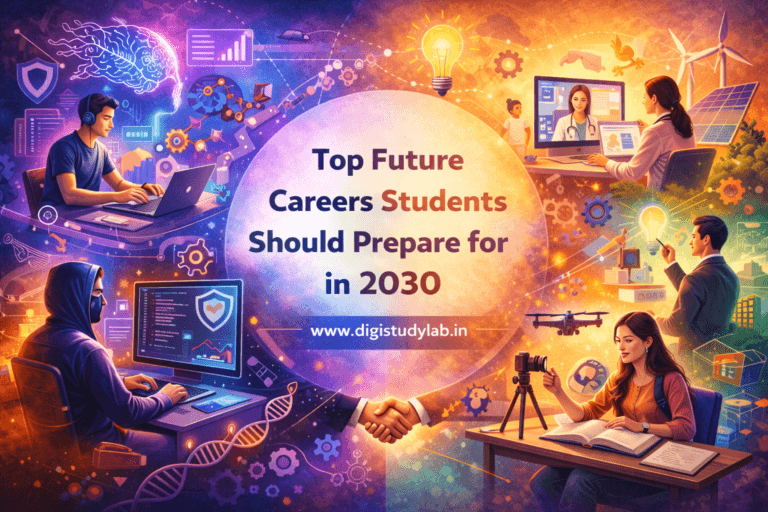
Digital skills connect directly to emerging career opportunities. Fields such as artificial intelligence, data science, cybersecurity, digital marketing, and online education rely heavily on technological competence.
Even non-technical careers require digital awareness. Healthcare professionals use digital systems for patient management, educators use digital platforms for teaching, and businesses rely on online tools for communication and operations.
Students who develop digital skills early gain an advantage in understanding professional environments.
Role of Digital Skills in Academic Success
Digital skills enhance learning experiences. Students can access digital libraries, participate in virtual discussions, and explore interactive learning materials.
Digital tools support project-based learning, research activities, and presentations. They encourage independent learning and curiosity.
Understanding digital systems also improves time management. Students can plan tasks, track progress, and organize resources efficiently.
Digital Literacy and Responsible Usage
Digital literacy involves understanding how technology affects society, communication, and information sharing. Students must learn responsible usage, ethical practices, and online etiquette.
Responsible digital behavior includes respecting privacy, avoiding misinformation, and using platforms constructively.
How Students Can Start Developing Digital Skills
Developing digital skills does not require advanced infrastructure. Students can begin with simple steps.
Exploring productivity tools, practicing online research, and learning communication platforms help build confidence. Participating in online courses and digital workshops enhances learning.
Hands-on practice is essential. Applying knowledge through projects and experiments strengthens understanding.
Continuous learning ensures improvement. Technology evolves, and staying updated is necessary for long-term success.
Role of Education Systems
Educational institutions must integrate digital learning into curricula. Practical exposure, digital assignments, and interactive learning methods help students adapt to modern environments.
Teachers also play a crucial role in guiding learners toward responsible and effective digital usage.
Role of Educational Platforms
Digital learning platforms support skill development by providing structured resources and accessible learning opportunities.
Digistudylab.in focuses on educational and informative content that helps students understand the importance of digital skills, career readiness, and modern learning methods. By promoting awareness and practical understanding, such platforms contribute to skill-based education.
Future of Digital Skills
Digital transformation will continue to shape industries. Artificial intelligence, automation, virtual reality, and data-driven systems will influence how work is performed.
Students who build digital skills will be better prepared to adapt, innovate, and lead in future environments.
Learning digital skills is not a one-time activity. It requires continuous improvement and curiosity.
Conclusion
Digital skills have become essential for academic success, career readiness, and personal development. They empower students to interact with technology confidently, access knowledge effectively, and communicate globally.
From basic computer literacy to advanced technological competencies, digital skills support learners in adapting to modern challenges and opportunities. They enhance creativity, productivity, and problem-solving abilities.
Educational awareness plays a key role in guiding students toward these skills. Platforms like Digistudylab.in help learners understand the importance of digital competence, career preparation, and future learning paths.
The future belongs to individuals who can learn, adapt, and apply digital knowledge effectively. By developing these skills today, students prepare themselves for a world driven by innovation, collaboration, and continuous growth.