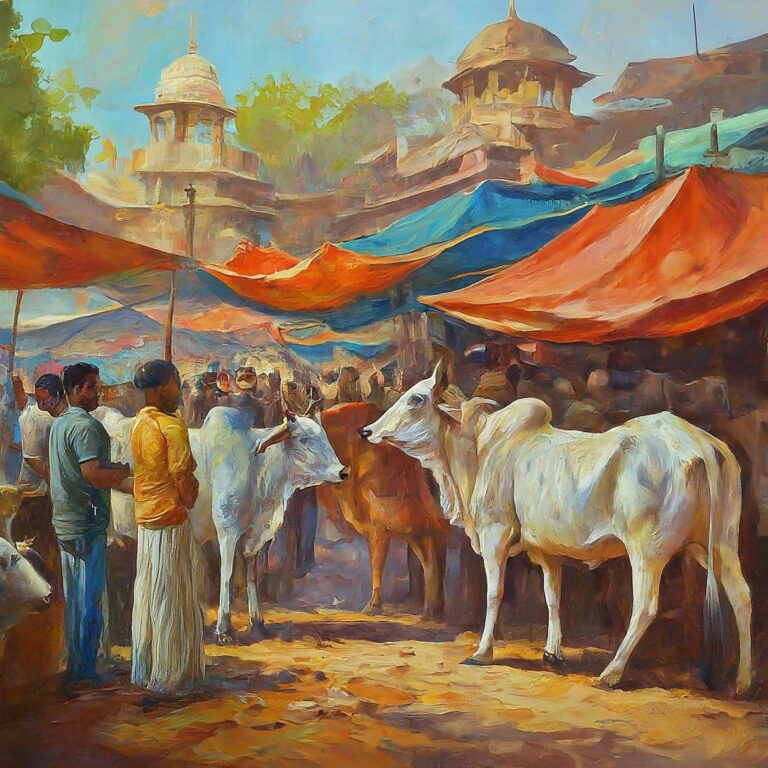
In the vast tapestry of India’s diverse wildlife, the buffalo holds a special place as a symbol of strength, resilience, and cultural significance. From the rural landscapes of villages to the bustling streets of cities, the presence of the Indian buffalo is unmistakable, embodying the essence of the country’s agricultural heritage and the bond between humans and animals. In this blog post, we delve into the rich tapestry of the Indian buffalo, exploring its characteristics, cultural significance, and its integral role in the fabric of Indian society.
The Majesty of the Indian Buffalo: A Closer Look
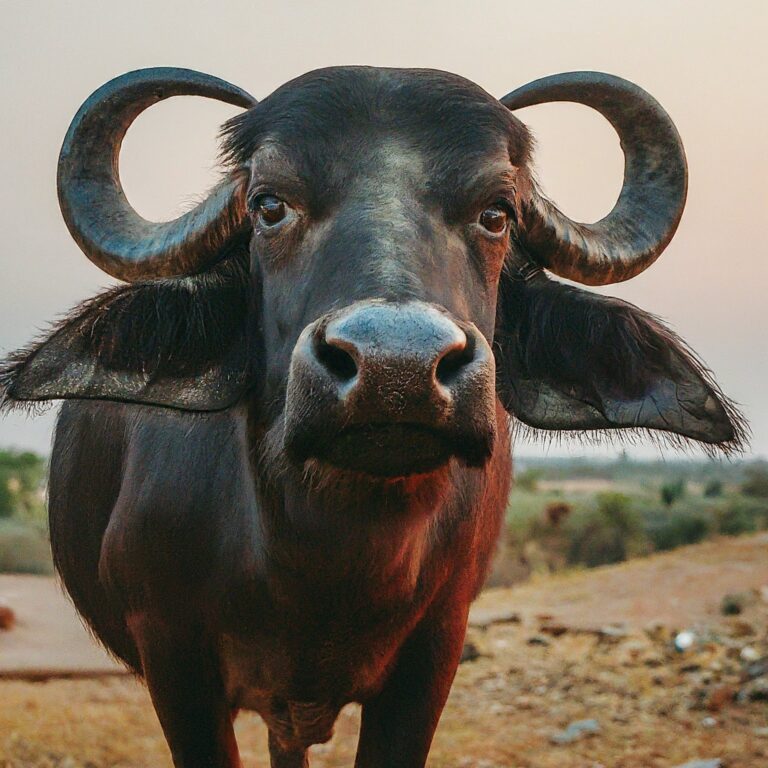
The Indian buffalo, scientifically known as Bubalus bubalis, is a member of the Bovidae family and is closely related to the domestic water buffalo found across Asia and Europe. Renowned for its robust build, distinctive horns, and characteristic black or dark brown coat, the Indian buffalo cuts an imposing figure in the rural landscapes of the Indian subcontinent.
Characteristics and Habitat
Indian buffaloes are primarily found in the riverine plains and marshy areas of India, particularly in states like Uttar Pradesh, Punjab, Haryana, and Maharashtra. They thrive in humid environments and are well-adapted to life in wetlands, making them integral to the agricultural practices prevalent in these regions.
One of the defining features of the Indian buffalo is its remarkable resilience to harsh environmental conditions. With a sturdy physique and a thick coat that provides insulation against both heat and cold, these animals are well-equipped to endure the rigors of their habitat. Additionally, their ability to thrive on coarse vegetation and their efficient digestion make them valuable assets to farmers engaged in dairy and agricultural activities.
Cultural Significance and Symbolism
Beyond its role as a livestock animal, the Indian buffalo holds immense cultural significance in various aspects of Indian society. In many rural communities, buffaloes are revered as symbols of prosperity, fertility, and abundance. They are often featured prominently in religious rituals and festivals, where they are adorned with garlands and worshipped as manifestations of the divine.
Moreover, the Indian buffalo plays a vital role in the economy of rural India, serving as a source of milk, meat, and draft power for agricultural activities. The dairy industry, in particular, relies heavily on buffalo milk, which is prized for its high fat content and nutritional value.
Conclusion: Preserving a National Treasure
In conclusion, the Indian buffalo stands as a testament to the enduring bond between humans and animals, reflecting the resilience and resourcefulness ingrained in the fabric of Indian society. As custodians of this majestic species, it is our collective responsibility to ensure its conservation and welfare for future generations to appreciate and cherish.
At Digi Study Lab.in, we celebrate the rich biodiversity of India and the myriad ways in which it shapes our cultural identity. Join us in exploring the wonders of the natural world and uncovering the hidden treasures that lie within our midst.
Discover more fascinating insights and educational resources by visiting Digi Study Lab.in today!
The Indian Buffalo: A Source of Inspiration
Beyond its tangible contributions to agriculture and culture, the Indian buffalo serves as a source of inspiration in various artistic and literary endeavors. Throughout history, these majestic creatures have been immortalized in folklore, mythology, and traditional art forms, symbolizing strength, perseverance, and the indomitable spirit of the Indian people.
Similarly, in visual arts and traditional crafts, the buffalo serves as a popular subject, depicted in paintings, sculptures, and intricate handicrafts that showcase its majestic form and cultural significance. From tribal motifs adorning pottery and textiles to elaborate sculptures adorning temples and public spaces, the buffalo’s presence permeates every aspect of Indian artistic expression, serving as a timeless symbol of vitality and abundance.
Conservation Efforts and Challenges
Despite its cultural and economic importance, the Indian buffalo faces various threats to its survival, including habitat loss, poaching, and disease. Rapid urbanization and industrialization have led to the encroachment of its natural habitats, pushing these animals to the brink of extinction in some regions.
Furthermore, the lack of comprehensive conservation strategies and inadequate enforcement of wildlife protection laws pose significant challenges to the long-term survival of the Indian buffalo. Addressing these issues requires a concerted effort from government agencies, conservation organizations, and local communities to mitigate human-wildlife conflicts, promote sustainable land management practices, and raise awareness about the importance of preserving biodiversity.
Empowering Communities for Conservation
At Digi Study Lab.in, we believe in the power of education and community engagement to drive positive change and foster a culture of conservation. Through our online platform, we aim to empower individuals with knowledge and resources to become stewards of the environment and advocates for wildlife protection.
By promoting environmental literacy, supporting grassroots conservation initiatives, and fostering partnerships with like-minded organizations, we can work together to safeguard the future of the Indian buffalo and ensure its continued presence in our natural and cultural landscapes.
Explore more articles, educational resources, and interactive learning modules on Digi Study Lab.in and embark on a journey of discovery and conservation today!
Tracing the Path of an Iconic Species: From the Indian Subcontinent to Global Recognition
The water buffalo (Bubalus bubalis), a majestic creature steeped in history and significance, holds a special place in the cultural and agricultural landscapes of various regions across the globe. Originating in the Indian subcontinent and Southeast Asia, the water buffalo has traversed continents, leaving an indelible mark on diverse ecosystems and human societies.
There are two distinct types of water buffalo recognized today: the river buffalo and the swamp buffalo. The river buffalo, prevalent in the Indian subcontinent and extending westward to regions like the Balkans, Egypt, and Italy, is characterized by its morphology and behavior. On the other hand, the swamp buffalo, found across Southeast Asia and stretching to the Yangtze valley of China, boasts its own unique set of traits and adaptations.
The domestic water buffalo likely descended from the wild water buffalo (Bubalus arnee), with phylogenetic studies indicating separate domestication events for the river and swamp types. It is believed that the river-type water buffalo originated in western India around 6,300 years ago, while the swamp-type emerged independently from Mainland Southeast Asia approximately 3,000 to 7,000 years ago. These distinct lineages spread across different regions, with river buffalo reaching as far as Egypt and the Balkans, while swamp buffalo populated Southeast Asia and parts of China.
Throughout history, water buffaloes have played a vital role in agriculture and trade. They were integral to the Indus Valley civilization, with evidence of their presence in Mesopotamia as early as 2500 BC. The sacrificial depiction of water buffaloes on seals from that era underscores their significance in ancient rituals and economies.
Water buffaloes are renowned for their suitability in rice cultivation, thanks to their adeptness at tilling fields and their ability to thrive in wetland environments. Moreover, their milk, richer in fat and protein compared to that of dairy cattle, has made them invaluable assets to dairy farming communities worldwide.
The water buffalo’s legacy extends beyond domestication, with feral populations establishing themselves in various regions, including northern Australia, Papua New Guinea, Tunisia, and northeastern Argentina. These feral herds serve as a testament to the adaptability and resilience of this remarkable species, as they carve out niches in new environments far from their original habitats.
In essence, the water buffalo exemplifies the intricate interplay between humans and animals, spanning millennia of coexistence and mutual dependence. Its journey from the banks of the Ganges to the plains of Australia reflects the enduring bond between civilizations and the natural world. As we continue to navigate the complexities of a rapidly changing planet, the story of the water buffalo serves as a reminder of our shared history and the need for stewardship in safeguarding our planet’s biodiversity.
Ecology and Behavior of Water Buffaloes: Adaptations to Habitat and Reproductive Patterns
Water buffaloes (Bubalus bubalis) exhibit fascinating ecological adaptations and behaviors that reflect their evolutionary history and interactions with their environment. From habitat preferences to reproductive patterns, these aspects of their biology shed light on their remarkable resilience and adaptability in diverse ecosystems.
Habitat Preferences: River vs. Swamp Buffaloes
River buffaloes demonstrate a preference for deep water, utilizing rivers and other bodies of water for thermoregulation and wallowing. In contrast, swamp buffaloes thrive in muddy environments, utilizing their horns to create mudholes for wallowing. During wallowing activities, they acquire a thick coating of mud, which serves as insulation against heat and parasites. Both types of water buffaloes are well-adapted to hot and humid climates, with temperatures ranging from 0 °C (32 °F) in the winter to 30 °C (86 °F) and higher in the summer. Access to water sources is crucial for thermoregulation, particularly in hot climates.
Dietary Preferences and Foraging Behavior
Water buffaloes possess a diverse diet, thriving on aquatic plants and foraging on a variety of fodder crops and green fodders. During floods, they graze submerged, raising their heads above the water to consume edible plants. Some of their preferred food sources include reeds, Cyperaceae, Eichhornia crassipes, and Juncaceae. Additionally, water buffaloes play a role in controlling invasive plant species, such as E. crassipes and Arundo donax, by consuming them.
Reproductive Patterns and Reproductive Efficiency
Swamp buffaloes typically reach reproductive maturity at an older age compared to river breeds, with successful mating behavior continuing until the animal is 12 years old or older. Mating behavior is influenced by seasonal factors, with heat stress reducing libido. While water buffaloes are polyoestrous, their reproductive efficiency varies throughout the year, with distinct seasonal changes in displaying estrus, conception rate, and calving rate. Gestation typically lasts between 281 to 334 days, with swamp buffaloes carrying their calves for one to two weeks longer than river buffaloes. Remarkably, water buffaloes can continue to work well into old age, with instances of individuals maintaining a working life of 30 to 40 years.
In summary, the ecology and behavior of water buffaloes highlight their remarkable adaptations to diverse habitats and climates. From their habitat preferences and dietary habits to their reproductive patterns, these characteristics underscore the species’ resilience and importance in various ecosystems.
Domestication and Breeding of Water Buffaloes: Unraveling the Evolutionary Journey
The domestication of the water buffalo (Bubalus bubalis) stands as a testament to the ingenuity and resourcefulness of ancient human societies. Through millennia of selective breeding and adaptation, humans have shaped the genetic diversity and behavioral characteristics of this iconic species. Let’s delve into the evolutionary journey of domesticated water buffaloes and the intricate processes of breeding that have led to the diverse array of breeds seen today.
Ancient Origins and Independent Domestication Events
The wild water buffalo (Bubalus arnee), native to the Indian subcontinent and tropical Southeast Asia, serves as the most likely ancestor of domesticated water buffaloes. From this ancestral lineage emerged two distinct types of domesticated water buffalo: the river buffalo and the swamp buffalo. These types are believed to have been domesticated independently, with the river type likely originating in western India around 6,300 years ago, and the swamp type emerging independently from Mainland Southeast Asia between 3,000 to 7,000 years ago.
Dispersal and Cultural Significance
Following domestication, river and swamp buffaloes dispersed across different regions, with river buffaloes venturing westward to Egypt, southern Europe, and the Mediterranean, while swamp buffaloes spread eastward to Southeast Asia, including the Philippines, Guam, Indonesia, and Malaysia. These domesticated buffaloes played integral roles in agricultural practices, transportation, and cultural traditions of diverse societies.
Genetic Diversity and Breeding Practices
Genetic studies have shed light on the complex domestication processes and breeding practices that have shaped the genetic diversity of water buffaloes. Mitochondrial DNA analyses indicate that the two types of water buffalo were domesticated independently, with significant genetic divergence occurring over millions of years. Breeding programs have led to the development of various breeds, including the Murrah, NiliRavi, Carabao, Anatolian, Mediterranean, and Egyptian buffaloes, each adapted to specific environmental and agricultural needs.
Recent Genetic Discoveries
Recent advancements in genomic analyses have provided further insights into the evolutionary history of water buffaloes. Studies have revealed that swamp and river buffaloes separated genetically before domestication, approximately 0.23 million years ago. Surprisingly, analyses of water buffalo genomes have also uncovered unexpected relationships with other species, such as the lowland anoa and the tamaraw of the Philippines, highlighting the interconnectedness of biodiversity in the region.
In conclusion, the domestication and breeding of water buffaloes represent a remarkable chapter in the history of human-animal relationships. From their ancient origins to contemporary breeding practices, water buffaloes continue to play vital roles in agricultural economies and cultural traditions worldwide. As we unravel the genetic mysteries and evolutionary pathways of these majestic creatures, we gain a deeper appreciation for the enduring bond between humans and their animal companions.