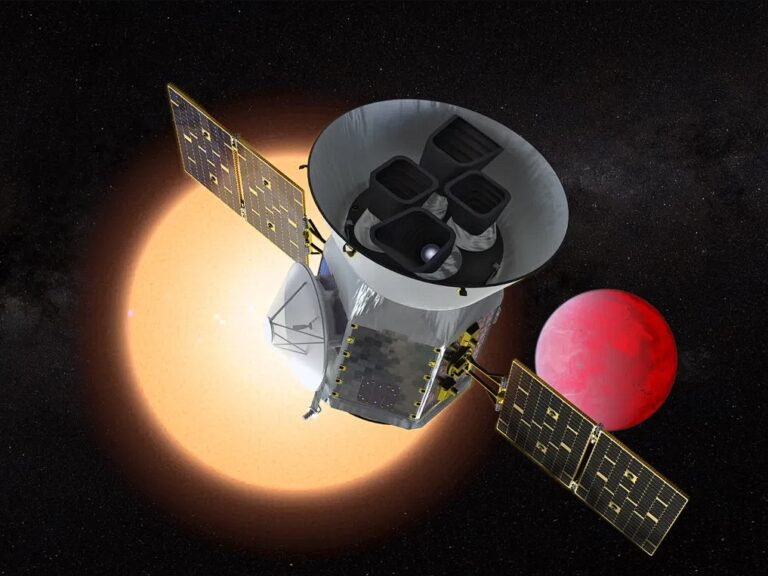
NASA’s Transiting Exoplanet Survey Satellite (TESS) has not only expanded our catalog of known exoplanets but has also revolutionized the field of astrophysics and planetary science. As TESS continues to send back data, its findings are reshaping our understanding of the universe and our place within it. This blog post will explore the broader impacts of the TESS mission, from the scientific advancements it has spurred to its influence on public interest and international collaboration.
Scientific Advancements and Discoveries
- Enhanced Detection Methods: TESS’s use of the transit method to detect exoplanets has been instrumental in refining our techniques for discovering new worlds. By monitoring the dimming of stars caused by planets passing in front of them, TESS has improved our ability to identify and characterize exoplanets. This technique has led to the discovery of numerous new planets, many of which are similar in size and composition to Earth.
- Improved Understanding of Planetary Atmospheres: TESS’s discoveries have paved the way for detailed studies of exoplanetary atmospheres. The mission’s data helps scientists select the best targets for atmospheric analysis using telescopes like the JWST. Understanding the composition of exoplanetary atmospheres is crucial for assessing their habitability and potential for supporting life.
- Exoplanetary Diversity: TESS has uncovered a diverse array of exoplanets, ranging from rocky terrestrial planets to gas giants and ice worlds. This diversity enhances our understanding of planetary formation and evolution, offering insights into the variety of planetary systems that exist in our galaxy.
- New Insights into Star Systems: By studying the stars that host exoplanets, TESS provides valuable information about the characteristics of different stellar types. This knowledge helps scientists understand how different stars influence the formation and development of planetary systems.
- Preparation for Future Missions: The data collected by TESS is instrumental in preparing for future space missions and telescopes. By identifying promising exoplanet candidates and characterizing their properties, TESS sets the stage for more detailed investigations and targeted observations.
Influencing Public Interest and Education
- Inspiring the Next Generation: The TESS mission has captivated the public’s imagination and inspired interest in space exploration and science. By showcasing the potential for discovering new worlds and the possibility of finding life beyond Earth, TESS motivates young students and aspiring scientists to pursue careers in STEM fields.
- Educational Outreach: NASA and its partners have engaged in various educational outreach initiatives to share the findings of the TESS mission with the public. These efforts include interactive websites, educational videos, and public lectures, which help to make complex scientific concepts accessible and engaging for people of all ages.
- Media Coverage and Popular Science: The discoveries made by TESS have received widespread media coverage, bringing the excitement of space exploration into homes around the world. Popular science articles, documentaries, and social media discussions have contributed to a greater public understanding of exoplanets and their significance.
Fostering International Collaboration
- Global Partnerships: The TESS mission exemplifies the collaborative spirit of modern space exploration. NASA’s efforts are supported by international partners, including the European Space Agency (ESA) and various research institutions around the world. This global collaboration enhances the mission’s capabilities and broadens the scope of its scientific impact.
- Shared Data and Research: The data collected by TESS is made available to researchers worldwide, fostering a collaborative research environment. By sharing information and findings, scientists from different countries can work together to analyze data, interpret results, and advance our understanding of exoplanets.
- International Space Missions: The success of TESS highlights the importance of international cooperation in space exploration. Future missions, such as those aimed at exploring exoplanetary atmospheres or developing advanced space telescopes, will benefit from the collective expertise and resources of the global scientific community.
The Future of Exoplanet Exploration
As we look to the future, the discoveries made by TESS will continue to shape the field of exoplanet research and space exploration. Here are some key developments to watch for:
- Next-Generation Space Telescopes: The upcoming launch of the James Webb Space Telescope (JWST) will provide unprecedented views of exoplanetary atmospheres and surfaces. JWST’s advanced instruments will allow scientists to detect atmospheric composition, weather patterns, and potential biosignatures on newly discovered exoplanets.
- Interstellar Missions: Plans for interstellar missions, such as the Breakthrough Starshot initiative, aim to explore distant star systems and exoplanets. These missions could provide direct information about the habitability of planets in other star systems and offer a closer look at the broader universe.
- Advanced Detection Techniques: Future space missions and telescopes will continue to develop and refine detection techniques, including direct imaging, radial velocity measurements, and gravitational microlensing. These advancements will enhance our ability to discover and study exoplanets with greater precision.
- Continued Research and Discoveries: Ongoing research will build on the discoveries made by TESS, providing new insights into planetary systems, stellar environments, and the potential for life beyond Earth. Scientists will continue to explore the data and use it to refine our understanding of the universe.
Conclusion
NASA’s TESS mission has made remarkable contributions to our knowledge of exoplanets and the broader universe. By discovering new worlds, enhancing detection methods, and inspiring public interest, TESS has revolutionized our understanding of space and our place within it.
As we continue to explore the cosmos and unravel the mysteries of distant worlds, the legacy of TESS will guide future missions and scientific endeavors. Stay tuned to Digi Study Lab.in for the latest updates on space exploration, exoplanet discoveries, and the ever-evolving field of astrophysics.
Explore our related articles, dive into the world of exoplanet research, and join the conversation about the future of space exploration. The journey of discovery is ongoing, and each new finding brings us closer to understanding the vast and intriguing universe that lies beyond our own planet.
Resources for Further Reading
For those interested in delving deeper into the world of exoplanets and the TESS mission, we recommend the following resources:
- Books:
- “Exoplanets: Hidden Worlds and the Quest for Extraterrestrial Life” by Donald Goldsmith
- “The Search for Life on Other Planets” by Bruce Jakosky
- Research Papers:
- “The Transiting Exoplanet Survey Satellite (TESS)” by George R. Ricker et al.
- “Planetary Atmospheres in the Era of the Transiting Exoplanet Survey Satellite (TESS)” by Laura Kreidberg et al.
- Websites:
- NASA’s TESS Mission Page (nasa.gov/tess)
- The Harvard-Smithsonian Center for Astrophysics (cfa.harvard.edu/tess)
By engaging with these resources, you can deepen your understanding of exoplanets and stay informed about the latest advancements in space exploration. The journey of discovery is just beginning, and the universe awaits our exploration.